EMDR: Not Hypnosis, Not Hocus Pocus
What is and isn't the truth about EMDR therapy
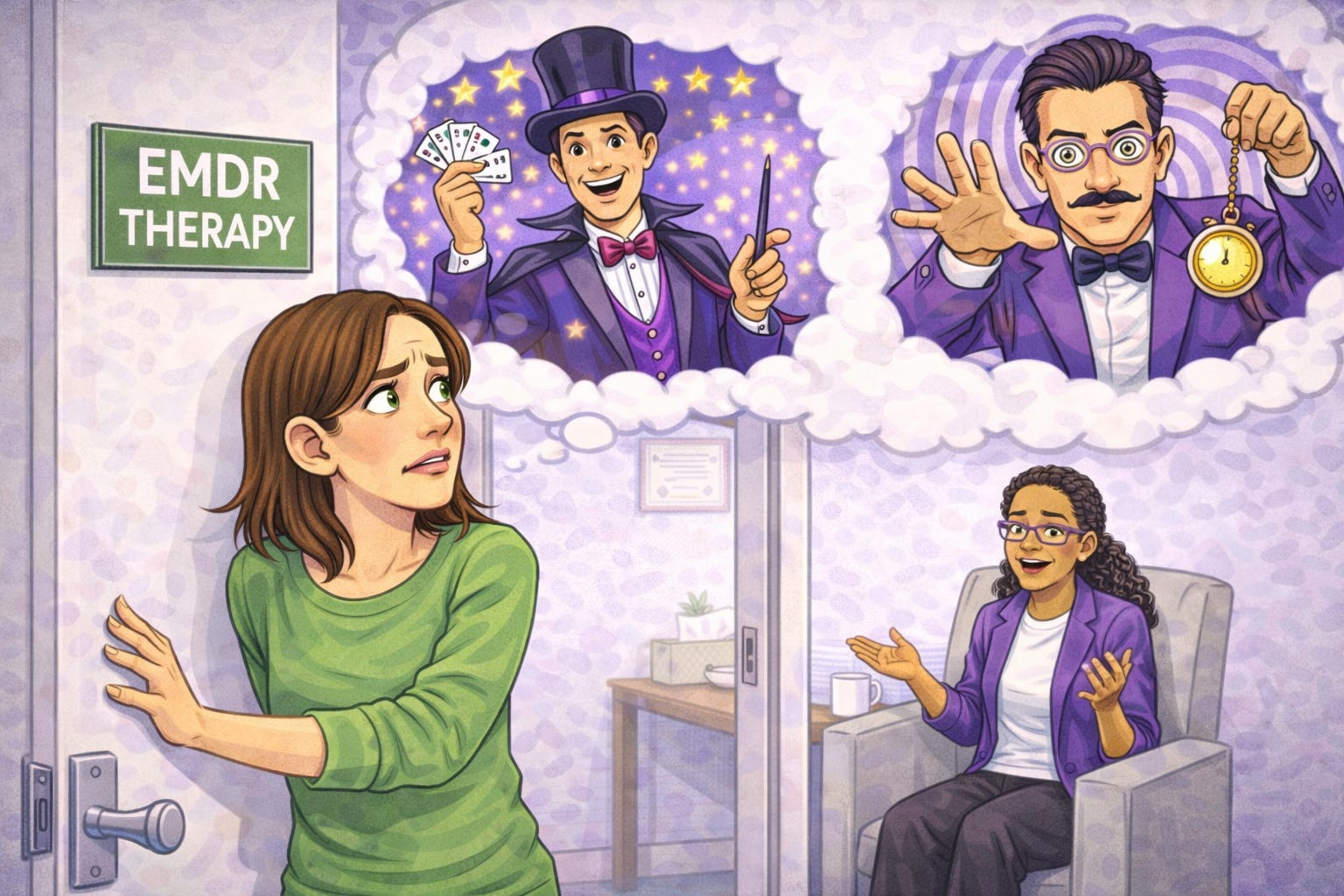
Two of the most common reactions you’ll get from people when you mention EMDR in casual conversation: Some people will nod knowingly like you’ve just mentioned their favorite obscure indie band (Big Star! Fuck, Yeah!). While others offer half squints, as they mentally flash to Las Vegas stage shows, swinging pocket watches, and “you are getting very sleepy” nonsense.
A lot of the early misunderstanding about EMDR comes from how it looks from the outside. You sit in a chair, your therapist waves their hand (or a light bar) back and forth, and you follow the movement with your eyes. If you didn’t know better, you might assume your therapist was testing your reflexes, or about to pull a rabbit out of your ear. The real work is happening inside you, in the wiring and rewiring of your brain as it processes stuck memories.
Here’s the science in layman’s terms: sometimes, when something traumatic happens, the brain doesn’t finish processing it. The memory gets stuck, frozen in the wrong part of the brain, because the brainstem’s survival response never completed. EMDR helps a person finish that process. It’s not re-living the trauma. It’s re-filing it in the right mental cabinet so it stops hijacking the nervous system every time it gets activated.
That said, EMDR’s greatest asset isn’t just the bilateral stimulation or the clever neurological rewiring.
When EMDR works, it doesn’t just take the sting out of a specific memory. It changes how a person feels about the whole constellation of events around it. That argument they replayed on a loop for years suddenly feels… quiet. The smell that used to make their stomach clench now barely registers. The mental ambushes get fewer and farther between until one day, they’re just a moment in time.
But here’s the other side of it: EMDR can be a lot. Sometimes it brings up too much, too fast. Sometimes it leaves people emotionally wrung out for a day or two. Sometimes it feels like “nothing happened” until three weeks later, when a person realizes they just reacted to something in a completely new way. It’s not a quick-fix magic trick. It’s the brain doing heavy lifting. And like any workout, it needs the right coach and the time to repair.
Which brings us to the therapist/client relationship. EMDR is an experience that asks a person to revisit ideas and messages in their mind they’ve spent years avoiding. That’s not something most people can do with a stranger they don’t trust. Think of it like crossing a suspension bridge in the dark: you can’t see the other side, you’re not sure how sturdy it is, and the only reassurance you have is the person walking beside you. If you trust them, if they’ve shown they understand your pace, your fears, and when to slow down, you can take those first tentative steps. You can keep moving when it gets shaky. But without that trust, you’ll freeze halfway across (or decide not to step foot on the bridge at all).

This connection doesn’t mean overstepping professional boundaries by becoming besties or being each other’s emergency contact (on Tinder). It’s about familiarity, safety, and the kind of rapport that makes honesty possible. A client needs to feel that their therapist is fully present with them, that they’re paying attention not just to their words but to their tone, body language, and the silences in between. When they feel seen in that way, it becomes easier for them to say the hard things out loud, to let themselves feel emotions they might otherwise stuff down, and to follow the process even when it feels uncomfortable. In EMDR, that openness is everything. It’s what allows people to lean into the work instead of bracing against it, and ultimately, it’s what helps your clients make it to the other side with something lighter to carry.
The point of all this isn’t to convince anyone that EMDR is for them. Nothing is for everyone (except maybe oxygen and that delightful Chappell Roan song you just can’t seem to escape). But if someone has tried all the usual tools and still feels like something in their mind is holding them hostage, EMDR might be the lockpick they didn’t know existed. And if they are inclined to believe the brain plays a role in overall wellness, the science isn’t hard to grasp and the results can be remarkable. The day a client realizes that a memory that once had them by the throat now barely raises their pulse can feel like a quiet miracle. That shift doesn’t just change the memory; it changes the person.
As therapists, we don’t hand our clients miracles, we help them create the conditions where change can happen. EMDR is simply one more tool we have at our disposal. If it helps, think of EMDR like a personal training session for the nervous system (minus the spandex and plus the occasional ugly cry). Your job is spotting them through the heavy lifts so that one day they’ll come to the realization that they’re carrying might actually weigh far less than they thought it did.
Your Turn
What are your thoughts? What’s your experience been with EMDR? Have you tried it? Do you utilize it in your practice? We want to hear your hot or not-so-hot takes!